2012
My story begins long before the laboratory
Before scientists read my DNA, the olive had already written itself into Lebanon’s history, agriculture, traditions and daily life for generations.
زيتونة نوح
A living tree. An ancient story.
A branch of peace.
One tree. Many centuries of memory.
“Before I was known as Noah’s Olive Tree, I stood here quietly among the ancient olives of Bchaaleh. My story was carried by the people long before it was written by researchers.”
Carry the Branch ↓In Bchaaleh, an old story has travelled from one generation to another.
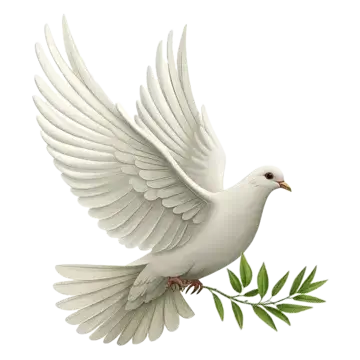
When the waters of the Flood began to recede, Noah sent out a dove. It returned carrying an olive branch — the sign that life had returned to the earth.
The people of Bchaaleh have long connected that branch with the ancient olives growing high in these mountains.
Today, I carry that story.
In the story we tell here, the dove came to me, took a branch from my canopy, and carried it back to Noah.
Whether memory, faith or legend, the branch has become part of who I am.
I am زيتونة نوح — Noah’s Olive Tree
My first name was a number
During the April 2018 field campaign, researchers documented me as BCH04, measured my trunk and collected two wood samples for carbon-14 investigation.
BCH04 remains my scientific identity.
Today, زيتونة نوح — Noah’s Olive Tree is the heritage name through which visitors meet me, remember me and discover my story.
Source: April 2–3, 2018 field sampling records.
Carry the Branch ↓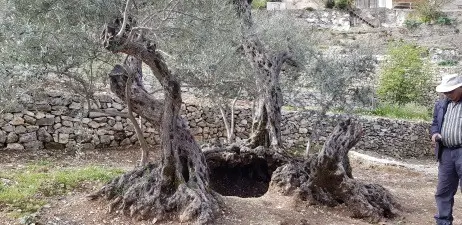
I grow in Bchaaleh’s high mountain olive landscape, around 1,200 metres above sea level — far colder and wetter than many of Lebanon’s traditional olive-growing areas.
Scientific research on Bchaaleh’s ancient olives found suitable sandy-loam soils and linked its unusual growth conditions to the long cold season, high rainfall and mountain environment. My survival belongs to this landscape as much as to my own biology.
Despite winter cold, snow, drought, rainfall and many seasons of change, I remain alive and productive.
My age cannot be separated from the mountain that shaped me.
My scientific record identifies me as BCH04. But to understand where I come from, researchers looked beyond me, studying the monumental olive trees of Bchaaleh to uncover the ancestry, diversity and relationships within the grove I belong to.
Beyond our twisting trunks lies an older story: the beginnings of olive cultivation, the movement of plant material across the Mediterranean, and generations of people who selected, propagated and cared for olive trees in this landscape.
Carry the Branch ↓Before scientists read my DNA, the olive had already written itself into Lebanon’s history, agriculture, traditions and daily life for generations.
Researchers explored how centennial olive material could be regenerated in vitro—showing that the biological heritage carried by ancient trees can also become part of conservation and propagation efforts.
When six monumental Bchaaleh olives were genetically studied, researchers found three distinct profiles. Some were linked to the traditional Baladi olive, while another represented a different ancient genetic profile.
A wider genetic study placed the monumental olives of Bchaaleh within an ancient Eastern Mediterranean story, linking them to the Baladi tradition and showing genetic proximity to Cypriot olive material.
Researchers examined Bchaaleh’s climate, soil, growth and tree age. They found a relatively cold and rainy environment where ancient olive trees have continued to survive and remain productive.
Researchers studying Lebanon’s centennial olives found that the Bchaaleh trees stood out for their great trunk dimensions while continuing to produce fruit and oil with characteristics worth conserving and studying further.
Scientific documentation and carbon-14 work added another layer to the effort to understand how long Bchaaleh’s ancient olives have been standing in this mountain landscape.
Researchers compared ancient Bchaaleh olives through their morphology and biochemical characteristics, showing diversity among the trees while confirming that their fruit and oil remain part of a living agricultural resource.
Researchers studied how mercury concentrations changed through the seasons in ancient Lebanese olive groves, showing that trees, soils and surrounding conditions can preserve environmental signals that science can read.
A large genetic study of ancient Lebanese olives found that many old trees had been grafted. The six monumental Bchaaleh olives studied showed matching canopy and basal-shoot profiles, supporting a self-rooted history for this ancient group.
Dating an ancient olive is not simple. My center has changed over centuries, and some of my oldest wood is no longer there.
In April 2018, researchers collected two wood samples from my trunk for carbon-14 analysis.
These dates describe the age of the wood that survived and was sampled. They do not prove the exact planting date of the whole tree. Because my original center is not fully available to date, part of my earliest history remains hidden.
Carry the Branch ↓What has grown around me
My story is not only written in wood and genes.
Around the olives of Bchaaleh grew a culture of harvesting, food, faith, craftsmanship and mutual help.
These traditions belong to the village that cared for trees like me across generations.
Al-Aawneh—mutual help during the olive harvest—brought neighbours and families together. Harvesting was work, generosity, and community at once.
Olive oil gave flavour to village tables, filled storage vessels, entered handmade soap, and helped families prepare for the seasons ahead.
Traditional sayings, poetry, celebrations and religious practices preserve the olive as a symbol of nourishment, continuity, blessing and peace.
In Bchaaleh, the olive is also part of faith. Around village churches and feast days, it evokes peace, blessing, endurance and the sacred bond between land, community and prayer.
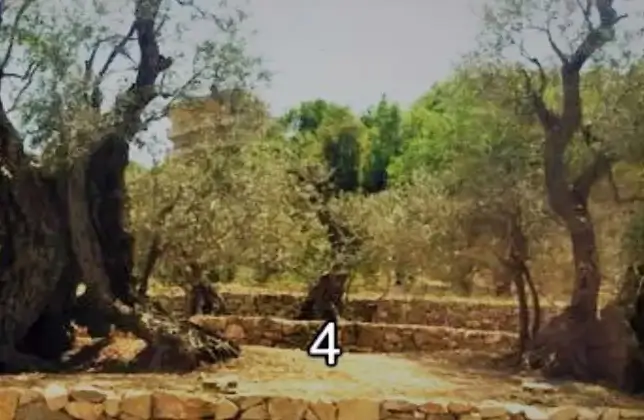
I am one tree in Bchaaleh’s monumental olive landscape. In the archival numbering used for the grove, I am tree No. 4. The trees around me differ in form and genetic identity, yet together we preserve a much larger story than any one of us could carry alone.
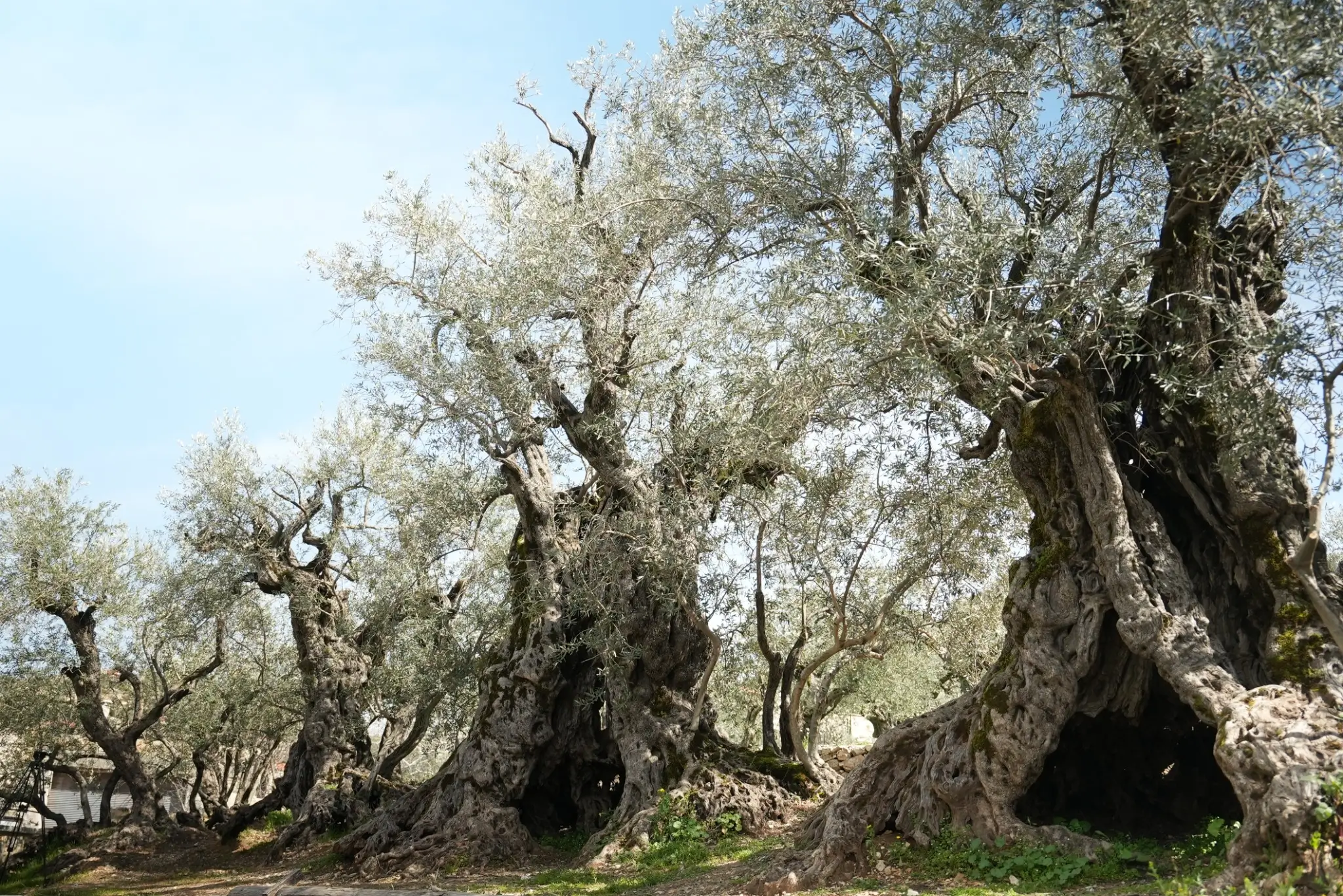
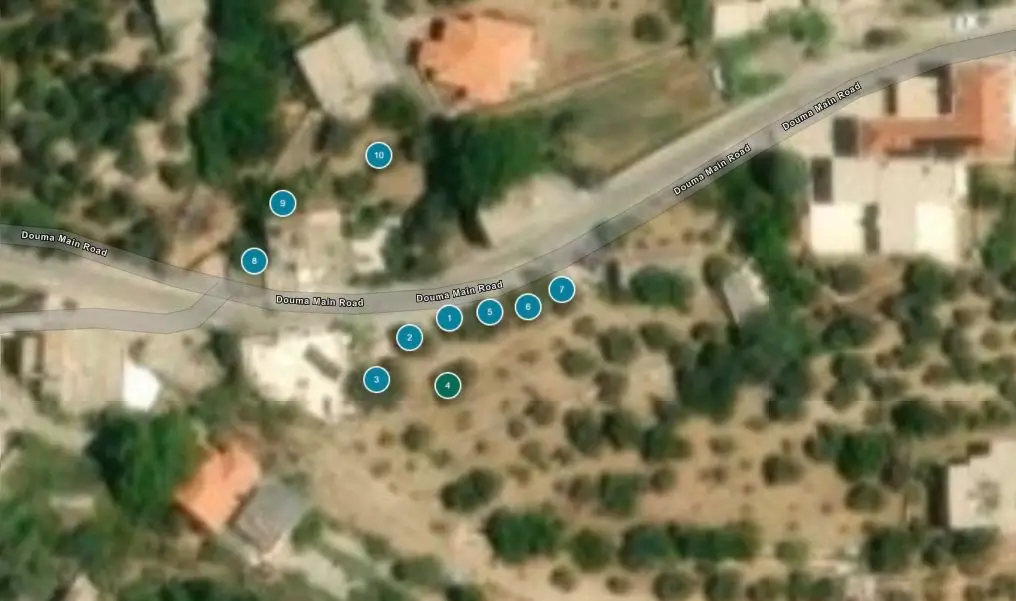
Bchaaleh’s Ecomuseum of Olive Tree Culture is a living museum without walls. The trees, village traditions and people are all part of its collection. Preservation means caring for both the landscape and the knowledge that gives it meaning.
According to the old story, a dove carried an olive branch from Bchaaleh as a sign of renewed life. What would you like to carry into the world?
Walk among Bchaaleh’s ancient olives. Explore the Ecomuseum’s living heritage experiences. Meet the people who keep the culture of the olive alive, season after season.
These are the investigations behind the story. Findings about the whole grove are clearly distinguished from measurements made on BCH04 itself.